

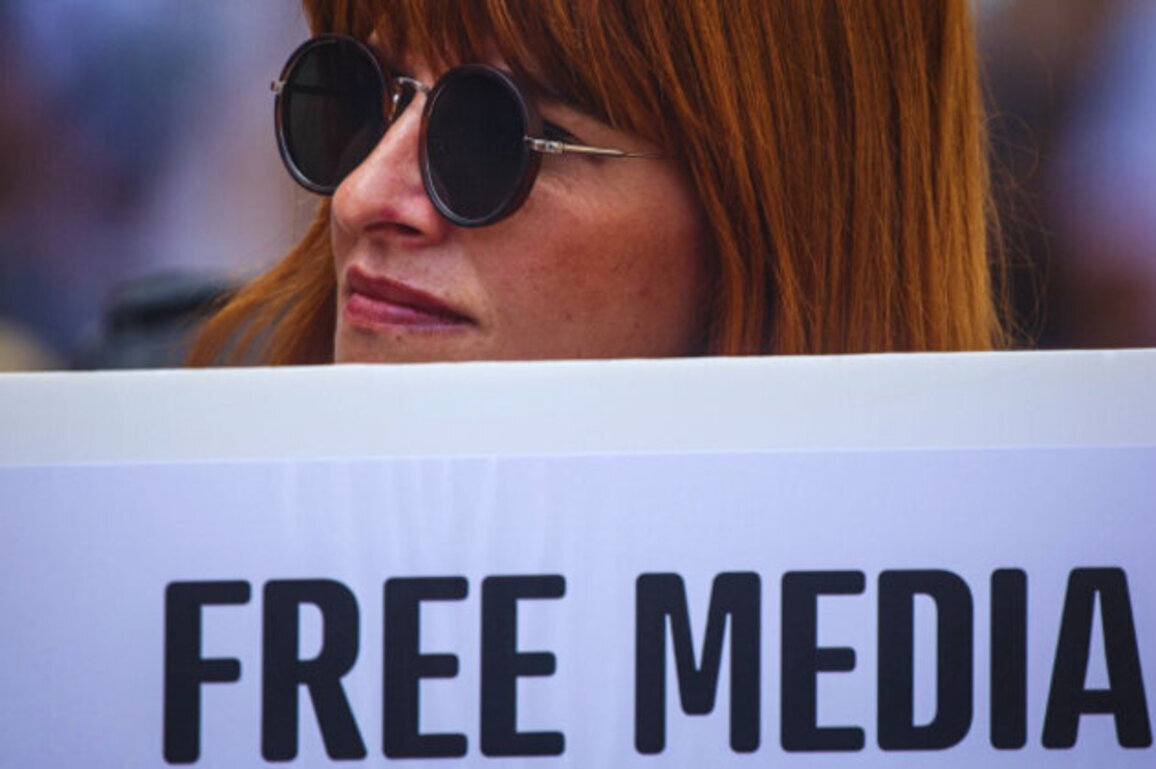
Press freedom around the world has fallen to its lowest level in 25 years, according to Reporters Without Borders (RSF), which warns of a broad and accelerating global deterioration in conditions for journalism.
The organization's 2026 World Press Freedom Index, which evaluates 180 countries on a five-point scale from ?good? to ?very serious,? shows a continued and widening decline. RSF states that, for the first time since the index was introduced in 2002, more than half of the countries assessed are now placed in the ?difficult? or ?very serious? categories.
It also highlights a dramatic global shift in living conditions for media freedom. ?For the first time in the index's 25-year history, more than half the world's countries now fall into the ?difficult? or ?very serious? categories for press freedom,? the report notes. The share of the global population living under ?good? conditions has dropped from around 20% to under 1%.
Only seven countries, all in Northern Europe, are classified as having ?good? press freedom, with Norway again leading the ranking. France is assessed as 'satisfactory? and placed 25th. RSF adds that ?the average score for all the countries studied has never been so low,? underlining the scale of the global deterioration.
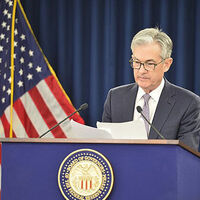
The United States is downgraded to the ?problematic? category, falling to 64th place. RSF cites growing pressure on journalists under President Donald Trump, describing his actions toward the media as 'systematic,? and points to cases such as the detention and deportation of journalist Mario Guevara, alongside reductions in funding for US international broadcasting.
Significant declines are also recorded in countries such as El Salvador and Georgia, reflecting what RSF describes as increasing political pressure and institutional restrictions. Niger registers the steepest annual fall, dropping 37 places amid worsening security conditions in the Sahel, where armed groups and military regimes continue to restrict media activity.
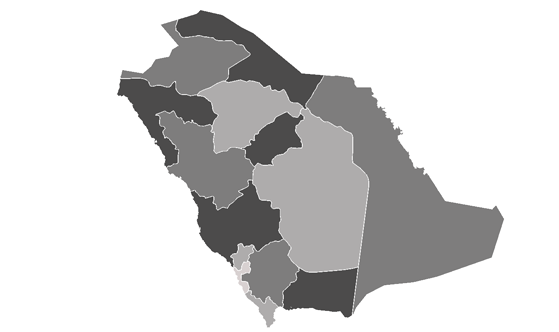
At the lower end of the ranking, Saudi Arabia falls to 176th place, while Russia, Iran, China, and Eritrea remain among the worst performers globally, with Eritrea last at 180th. Syria, by contrast, rises sharply following political change linked to the collapse of Bashar al-Assad's government.
RSF defines press freedom as ?the ability of journalists as individuals and collectives to select, produce, and disseminate news in the public interest independent of political, economic, legal, and social interference and in the absence of threats to their physical and mental safety.? Based on this definition, around three-quarters of countries are now classified as ?problematic? or worse.
The report also highlights strong regional differences, with Europe performing best overall, while Africa and Asia face more restrictive environments. However, RSF stresses that deterioration is visible across all regions, including within established democracies.
Bulgaria: ranked 71st, still in ?problematic? category
In this year's index, Bulgaria falls by one position to 71st place out of 180 countries, remaining in the ?problematic? category marked in brown on RSF's interactive map.
The report notes that legal pressure on journalists remains an issue in Bulgaria, including so-called SLAPP cases, which are also observed in other countries such as Guatemala. RSF warns that such legal mechanisms are increasingly used to pressure media outlets and reporters.
It also states that media freedom in Bulgaria remains fragile and unstable, describing the country as one of the EU's poorer and more corruption-affected member states. Independent outlets, according to RSF, continue to operate under economic and political pressure.
The report highlights structural vulnerabilities in the media system. Television and online platforms remain the main news sources, while print media continues to lose influence. The Council for Electronic Media is described as politically influenced, raising concerns over public media independence, while private outlets are exposed to ownership interests linked to other regulated sectors.
RSF also points to frequent intimidation of journalists by political actors, alongside attempts to manipulate media coverage for political purposes. Although political instability in recent years has somewhat reduced direct pressure following the end of Boyko Borissov's government, the underlying problems persist.
Advertising dependence is identified as a key vulnerability, with significant influence attributed to state-controlled or state-linked funding streams. The report notes that non-transparent allocation of public and EU funds can lead to favoritism toward pro-government media.
Investigative journalists covering corruption and organized crime are reported to face regular threats, while outlets focused on minority issues or funded by Western donors are often targeted by hostile campaigns. Physical attacks and intimidation, particularly during election periods, remain a concern, with impunity for such acts reinforcing the risk environment.
RSF concludes that Bulgaria's media system meets only minimum legal standards aligned with European human rights frameworks, but enforcement remains weak due to judicial inefficiency and corruption. The country's overall score is placed at 60.28, reflecting continued structural challenges in ensuring press independence and journalist safety.