

The United States, Russia, China, Israel, Iran and the dangerous arrogance of trying to order the world with fire
That is why every announced war must be stopped before it dresses itself as inevitability. That is the old irony of power: it always finds a noble word to justify the next step. Security. Stability. Deterrence. Proportional response. Preventive defense. Restoration of order. And when one looks again, proportionality has already been buried under the rubble.
The United States knows that grammar well. It speaks of international order, freedom of navigation, democracy and collective security, but its global power also rests on military bases, aircraft carriers, sanctions, covert operations, the defense industry, the dollar and strategic alliances. Not everything Washington does is destruction. But not everything it calls stability produces peace. Iraq, Afghanistan, Libya and other wounds remind us that a power can enter a territory promising order and leave behind an architecture of ruins, militias, migrations, resentment and reconstruction businesses.
Russia uses another language, but not a different instinct. Moscow invokes security, historical memory, NATO expansion, the defense of Russian speakers and multipolar balance to justify its war in Ukraine. But an invasion does not become less of an invasion because it uses defensive vocabulary. Ukraine has been turned into a territory of trenches, drones, wounded cities, displaced families, children under sirens and a Europe forced to rearm. Russia denounces Western hypocrisy, and often has material to do so. But denouncing anothers double standard does not absolve ones own artillery.
China appears with a more patient strategy. Beijing speaks of harmony, reunification, development, sovereignty, non-intervention and shared destiny. Its rise has lifted millions of people out of poverty and built an industrial capacity that changed the twenty-first century. But it also projects power over the South China Sea, pressures Taiwan, expands critical infrastructure, administers credit, controls production chains and understands that trade can be as strategic as a fleet. China does not need to bomb in order to order its surroundings. It can do so with ports, factories, debt, technology, minerals and imperial patience.
Israel calls security a doctrine born of historical trauma, regional threat and the memory of extermination. Its right to exist and protect its population cannot be denied without falling into moral brutality. But that security also cannot be used as an unlimited permit to destroy Gaza, displace civilians, collectively punish, multiply rubble and turn an entire population into a permanent suspect. Hamas committed atrocious crimes and also condemned its own people to a devastating war.
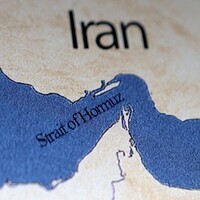
Iran, for its part, speaks of resistance, sovereignty, regional dignity and opposition to Western and Israeli domination. The Middle East has been intervened in, fragmented, armed and administered by external powers for decades. That is why resistance can be the language of dignity when it defends the weak.
The European Union often observes with moral superiority, but it lives trapped between principles and dependencies. It speaks of human rights, international law, peace, climate and democracy, while seeking gas, lithium, copper, uranium, markets, migration control, energy security and American military protection. Faced with Ukraine, it rearms. Faced with Gaza, it divides. Faced with Africa, it preaches cooperation while fearing migration and competing for resources. Faced with China, it speaks of decoupling, but buys industrial chains it cannot easily replace.
The old and new lions are not identical, but they recognize each other by appetite. The United States wants to preserve primacy. China wants to expand its historical margin. Russia wants to prevent its geopolitical reduction. Israel wants absolute security in an impossible region. Iran wants strategic depth and recognition. The European Union wants values without losing comfort. India rises between electoral democracy, nationalism, technology, inequality and maritime calculation. Turkey, Saudi Arabia and other regional actors play with religion, drones, oil, borders and ambition.
Arrogance also has a budget. World military spending reached US$2.72 trillion in 2024, with a real increase of 9.4%, the largest annual jump since the end of the Cold War, according to SIPRI. The United States spent US$997 billion, China US$314 billion, Russia US$149 billion, Germany US$88.5 billion, India US$86.1 billion, the United Kingdom US$81.8 billion, Saudi Arabia US$80.3 billion and Israel US$46.5 billion. Ukraine, turned into a battlefield, spent US$64.7 billion, equivalent to 34% of its GDP.
Power will always want to call its own expansion stability and anothers resistance chaos. No state invades saying it desires disaster. But Darwin, Hobbes, Clausewitz and Freud would understand the scene without much surprise: the primitive did not disappear, it only learned strategy, budget, doctrine and public relations.
Brief Bibliography
- SIPRI Trends in World Military Expenditure 2024, 2025.
- Reuters World military spending hits $2.7 trillion in record 2024 surge, 2025.
- Hannah Arendt On Violence.
Mauricio Herrera Kahn